
Voice Leading Fundamentals That Make Progressions Breathe
Why Your Chord Progressions Sound Stiff and How to Free Them
Roman numerals are valuable for identifying harmonic function, but they can become limiting when they are treated as the whole musical picture. A progression labeled ii-V-I may explain the relationship between chords, yet it does not reveal how the soprano, alto, tenor, and bass actually travel from one sonority to the next. Likewise, moving a root-position grip unchanged across a keyboard or fretboard can produce correct harmony while leaving the listener with a sequence of heavy, disconnected blocks.
Voice leading offers a more expressive way to hear the same progression. Each chord becomes a vertical alignment of independent vocal lines, and every line has a direction, a register, a contour, and a degree of tension. When neighboring voices remain still or move by a half-step or whole-step, the harmony begins to breathe. This is the foundation of smooth voice leading practice: the progression is no longer a chain of shapes, but a group of melodies moving together through time.
Auditory fatigue often comes from repeated leaps across instrumental registers. If every chord change sends the upper voices to a new location, the ear must repeatedly reset its sense of pitch and texture. Smaller melodic transitions create continuity, allowing rhythm, tone, dynamics, and phrasing to communicate more clearly. The result is not merely smoother theory; it is an arrangement that feels intentional and alive.
The Law of Minimal Motion and Common Tone Retention
The central principle is economical movement. When two adjacent chords share one or more notes, retain those common tones in the same voice whenever the register and style allow it. Move the remaining voices by the smallest practical interval, preferably a half-step or whole-step. In a C major triad moving to A minor, for example, the notes C and E can remain fixed while G moves up to A. The harmony changes significantly, but the ear hears continuity because two-thirds of the sonority remain stable.
This approach contrasts with disjunct motion, in which several voices leap in parallel to a new grip. Large jumps can be expressive, especially in cinematic writing, folk accompaniment, or deliberately spacious arranging, but they should be chosen rather than produced accidentally. Step-wise parsimony reduces friction because each voice has a singable path. It also gives the listener enough continuity to perceive the harmonic change as a transformation rather than a replacement.
For standard triads, begin with a few reliable rules. Retain common tones, move other upper voices by step when possible, and avoid asking one part to leap farther than the musical texture can comfortably support. In extended harmony, the same principle applies even when the chord contains sevenths, ninths, or altered tones. The fifth may be omitted if necessary, while the third and seventh often deserve priority because they define quality and function. Berklee”s discussion of voice leading paradigms for harmony also emphasizes limiting individual motion, preserving common tones, and treating each part as a melodic line.
- Keep shared notes in the same voice when they do not create awkward spacing.
- Prefer half-step and whole-step movement in the upper parts.
- Use inversions to reduce unnecessary bass leaps.
- Reserve larger intervals for clear expressive purposes.
- Listen to each voice separately, then hear the complete chord as a unified texture.
Mapping Voice Independence Across Piano Strings and Fretboards
The difference between static leaps and voice-led motion becomes especially clear in a ii-V-I progression in C major. A pianist might play D minor, G major, and C major in root position, sending the bass from D to G to C and moving several upper notes by large intervals. A more connected version can use Dm7 with F in the soprano, G7 with F retained as the seventh, and Cmaj7 with E and G placed nearby. The bass still announces the harmonic function, while the upper voices form compact lines that guide the ear toward resolution.
| Approach | Typical result | Primary listening effect |
|---|---|---|
| Root-position block chords | Several voices leap between each chord | Clear but heavy and discontinuous |
| Common-tone voicings | Shared notes remain fixed | Stable, connected, and transparent |
| Inverted or close voicings | Upper voices move by small intervals | Fluid, vocal, and phrase-like |
| Guide-tone voicings | Thirds and sevenths define the motion | Focused tension and release |
On piano, isolate the soprano before filling in the rest of the chord. Choose a short melody for the top voice, then place the alto and tenor as close as possible beneath it without creating congestion. The left hand can provide the bass, or it can leave space for a bassist. This method prevents the right hand from functioning as an undifferentiated block. It also makes the inner parts audible, which is essential when the arrangement depends on subtle harmonic color.
Fingerstyle guitar requires the same thinking through a physical system of strings, frets, and sustain. Choose neighboring chord shapes within one fretboard area rather than reaching automatically for familiar open-position grips. Anchor fingers should remain down when a note is common to consecutive chords, allowing resonance to continue while the other fingers adjust. A practical lesson on fingerstyle chord voice leading demonstrates how nearby shapes can create step-wise movement without requiring the player to calculate every note in real time.
Do not confuse smoothness with permanent sameness. Releasing an anchor finger can be musically useful when a phrase needs a clean articulation, a new register, or a change in texture. The important point is that the movement should be heard and felt as part of the phrase. Let the hand follow the line, rather than forcing the line to follow a convenient but disconnected shape.
Four-Part Distribution and Doubling Discipline
Four-part writing becomes convincing when every register has enough room to speak. The soprano should carry the most immediately audible melodic contour, the alto should support the color without crowding it, the tenor should fill the middle with restraint, and the bass should establish the harmonic foundation. When alto and tenor sit too close to the bass, the lower middle can become muddy. When the upper voices are packed too tightly in a low register, individual lines lose definition.
In traditional root-position triads, the root is commonly doubled because the chord contains three distinct pitch classes but must supply four parts. An upper voice therefore repeats the bass note, while the third and fifth complete the sonority. In inverted triads, doubling choices depend more strongly on function, register, and the behavior of tendency tones. A stable chord may tolerate a doubled root, while a progression involving a strong tendency tone may require that tone to resolve carefully rather than be emphasized through unnecessary repetition.
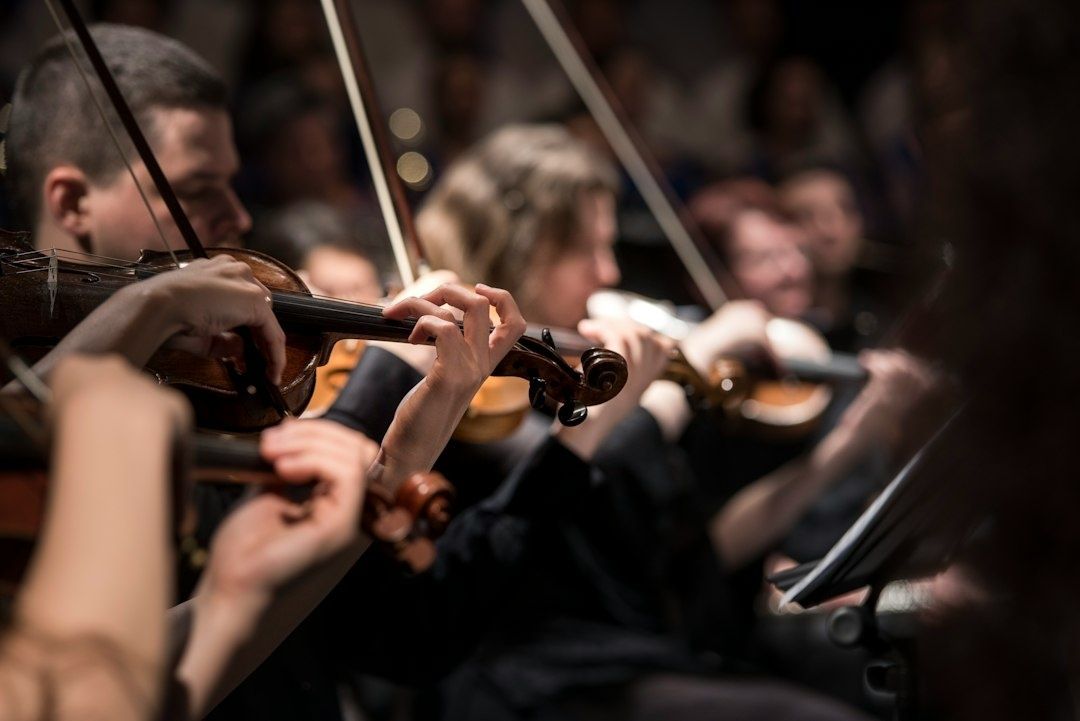
Spacing should also respond to the ensemble. A string quartet, a choir, and a keyboard with a synthesizer pad do not occupy the same acoustic space. Violin and soprano lines can project above a closely voiced middle, while viola, tenor, or inner keyboard tones need sufficient separation to remain articulate. Arrangers working with multiple parts can consult Music Theory for the 21st-Century Classroom for formal guidance on root doubling, four-part distribution, and tendency-tone behavior.
- Double the root in many stable root-position triads, especially when clarity is the priority.
- Protect the third and seventh when they establish chord quality or harmonic direction.
- Avoid excessive density in the low and low-mid registers.
- Keep the soprano singable, even when the inner voices are highly colored.
- Test the arrangement at performance volume, where register conflicts become more apparent.
Open texture is not automatically better than close texture. Close voicing can create intimacy and intensity in a piano or vocal setting, while wider spacing can give strings, guitars, and orchestral pads room to resonate. The guiding question is whether each part can be heard as a purposeful contribution. If a note exists only because a shape demands it, consider whether a different inversion, omission, or octave would allow the arrangement to speak more clearly.
Defying Gravity with Guide Tones and Counter-Melodic Flow
Guide tones, especially the third and seventh, provide a compact map of harmonic tension and release. In a dominant seventh chord, the third and seventh form the characteristic interval that points toward resolution. In a ii-V-I progression, these tones often move downward into the next chord, producing a familiar sense of gravitational pull. That movement is effective, but it can become predictable when every voice follows the same downward tendency.
An ascending inner voice can counteract that drift. Instead of allowing all chord tones to settle downward, design one line that rises by half-step or whole-step through the progression. The line may use a chord tone, a suspension, or a carefully resolved non-chord tone. This kind of anti-gravity writing does not reject functional harmony; it places a second current inside it. The bass can descend while an inner voice rises, creating contrary motion and a more active harmonic surface.
- Write the progression in a simple block-chord form and record or notate it clearly.
- Identify the soprano, alto, tenor, and bass notes in every chord.
- Mark common tones and circle every leap larger than a third in the upper voices.
- Replace avoidable leaps with nearby chord tones, inversions, or guide-tone substitutions.
- Choose one inner voice and shape an ascending or descending step-wise counter-melody.
- Play each part alone, then combine the voices at a slow tempo.
- Restore any deliberate leaps only after confirming that they serve phrasing, register, or dramatic emphasis.
Use this audit on an existing progression rather than waiting for a new composition. A mechanical four-chord loop may need only one altered inner voice to acquire direction. For example, retain a common tone across two chords, move the alto upward by semitone, and let the bass carry the larger functional movement. The listener may not name the alteration, but the progression will feel less repetitive because its internal lines now possess independent momentum.
Modern harmonic language can extend this principle beyond traditional tonal cadences. Shared tones and semitone connections can create cohesion even when a progression has no obvious single key center. This is particularly useful in contemporary jazz, film scoring, and electronic production, where color may matter as much as dominant-to-tonic function. The ear remains able to follow a progression when at least some voices provide a consistent path through the changing harmony.
Bring Your Arrangements to Life with Every Step
Voice leading is best understood as a physical economy of sound rather than a cage of inflexible rules. Minimal motion, common-tone retention, careful doubling, and controlled spacing provide dependable starting points, but expressive arranging still depends on context. A sudden octave leap may be exactly right at a phrase peak. A deliberate parallel motion may create a powerful pop, gospel, or cinematic color. The discipline lies in knowing what the voices are doing and why.
Build a short daily routine around listening. At the keyboard, play a progression slowly and sing the soprano, then the bass, then one inner part. On guitar, sustain an anchor note while changing the surrounding shape. Record the result, listen for places where the texture collapses or jumps, and revise only one voice at a time. Finally, review a recent composition note by note. Trace each part as if it were a singer preparing a phrase, and look for opportunities to retain, step, rise, or resolve with greater intention. When every line receives that attention, chord changes stop sounding like mechanical events and begin to carry breath, weight, and human direction.