
Breaking the Muscle Memory Trap: How Backward Chaining and Rhythmic Shifts Secure Difficult Passages
Why Linear Repetition Fails Under Stage Spotlight
Many instrumentalists learn a demanding passage by starting at the beginning, playing slowly, increasing the metronome, and repeating the entire sequence until the fingers seem to know what to do. This approach can produce a convincing first impression in the practice room, yet it often reveals its weakness under performance pressure. Adrenaline changes breathing, muscular tone, attention, and the perceived speed of time. A passage that depended on relaxed, unexamined continuity can suddenly lose its shape when the mind becomes alert to every possible mistake.
The familiar slow-to-fast routine is not useless, but it becomes unreliable when it is the only method. Linear repetition gives the opening of a phrase more successful attempts than the ending. The player arrives at the final shift, chord, leap, articulation, or release after spending attention and physical energy on everything that came before. As a result, the beginning feels magnetic while the conclusion feels like territory reached by luck. A secure performance requires the opposite kind of preparation: every arrival must already feel known before the passage is connected at full length.
This distinction matters because finger memory is not the same as architectural awareness. Automated movement can operate efficiently when conditions remain familiar, but it may not provide a dependable map when tempo, acoustics, nerves, or physical sensation change. Conscious practice identifies landmarks, transitions, releases, and points of recovery. Instead of merely hoping that the fingers will continue, the player creates a sequence in which each gesture has a purpose and each phrase knows where it is going.
The Architecture of Motor Chunking and Neural Stability
The nervous system does not store a long musical passage as a separate command for every individual note. Through repetition, it groups actions into motor chunks: a fingering pattern, a string crossing, a position shift, a bow distribution, a breath sequence, or a coordinated rhythmic figure. Chunking reduces cognitive load and allows a performer to think in larger musical units rather than micromanaging every movement.
Those chunks, however, are not equally stable. Research on conservatory pianists performing two-octave scales found increased trial-to-trial timing variability at octave boundaries, suggesting that performers represented the scales as connected but distinct motor units. The study, published in Frontiers in Psychology, also linked production instability with difficulty detecting timing deviations at those same boundaries. In practical terms, the places that feel like invisible transitions may be precisely where the motor system needs deliberate attention.
Mechanical practice can therefore create a misleading sensation of security. Once a chunk runs smoothly, attention drifts, and the player may rehearse the same transition without truly examining it. Under pressure, a weak boundary can become a hesitation, an unwanted accent, a tense shift, or a loss of rhythmic placement. Active cognitive intent is valuable here, though it should not be confused with forcing the hands through conscious control. A useful practice intention is specific: hear the arrival, feel the release, prepare the next position, and preserve the pulse.
- Mark the beginning and ending of each motor chunk.
- Identify which transition requires the most preparation rather than the most speed.
- Practice the boundary in isolation, then reconnect it to the surrounding phrase.
- Keep the musical destination audible in the imagination while the movement remains physically economical.
Evidence also cautions against overly simple claims about chunking. A study titled Impact of conscious intent on chunking during motor learning found that conscious intent improved overall learning, but measured chunk formation did not necessarily increase in the expected way. Motor learning can involve transition learning, reinforcement, and sleep-dependent consolidation as well as visible chunk formation. The practical lesson is not to abandon conscious attention, but to use it intelligently: attention should shape the quality and purpose of repetitions rather than attempt to supervise every millisecond of movement.
The Mechanics of Backward Chaining from the Final Anchor Beat
Backward chaining reverses the ordinary direction of practice. Instead of beginning with the first note and adding material toward the end, the player begins with the final landing point and gradually prepends the notes that lead into it. The landing beat might be a resonant chord, a clean release, a high note, a cadence, a position arrival, or the first stable note after a difficult run. It becomes an anchor that attracts every preceding movement.
This method addresses a basic weakness in start-to-finish repetition: the ending receives the fewest fresh, attentive attempts. Backward chaining gives it the most. It also changes the psychological experience of the passage. New material is no longer followed by more uncertainty. Each extension moves toward a section already secure, producing a magnetic forward pull. When fatigue appears, the player is not merely trying to survive the final notes; the final notes have been prepared as the most reliable part of the phrase.
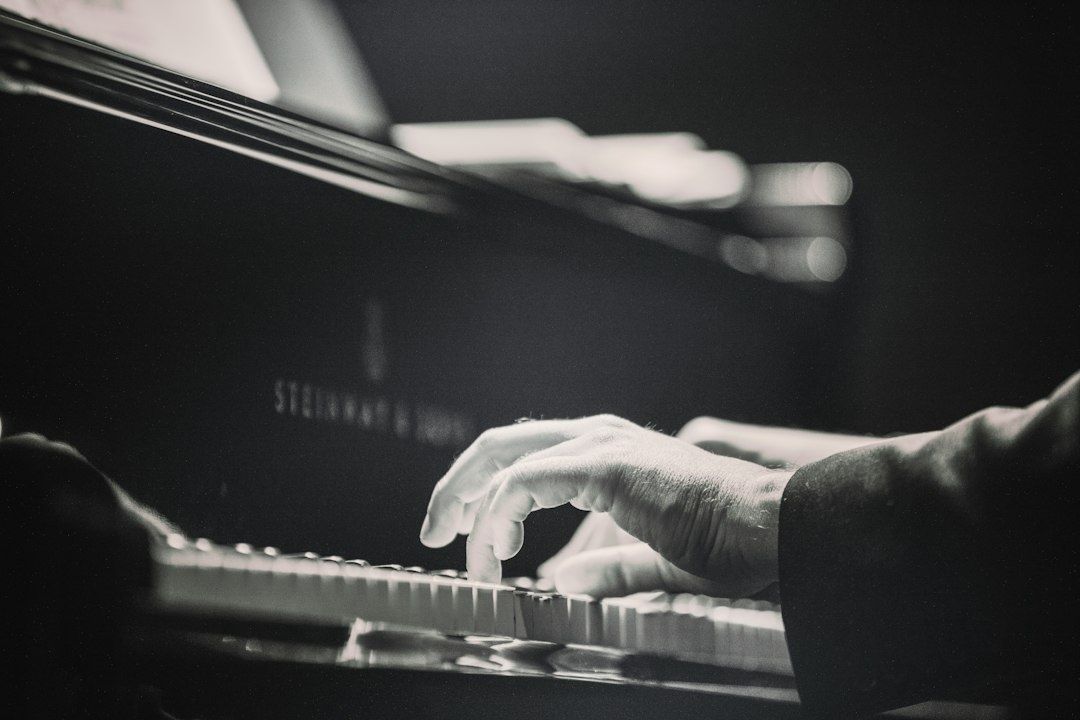
Begin with the smallest useful unit, often the last two notes or the final gesture. Play it at the intended tempo with accurate rhythm, tone, articulation, and release. Then add one preceding note or beat and repeat the enlarged unit until the approach feels direct and unforced. The goal is not to rush through repetitions, but to make every newly added fragment resolve into a known destination.
- Choose the anchor. Mark the exact beat where the phrase must arrive, including its sound, timing, fingering, release, and physical position.
- Secure the smallest ending unit. Practice the final two or three notes until they feel complete rather than merely correct.
- Add a preceding gesture. Introduce the note, shift, breath, stroke, or articulation immediately before the anchor, then connect it repeatedly to the ending.
- Expand by overlapping units. Add another beat or small group while preserving the same successful arrival. Keep the passage short enough for close listening.
- Test the connection. Once the full run is assembled, play it from its beginning and from several middle points. This prevents the passage from becoming dependent on one starting cue.
For a virtuoso scale, for example, isolate the final octave or final shift first. Once stable, add the preceding four notes, then the preceding group, maintaining the correct hand shape and pulse as each unit flows into the anchor. On guitar, the method can clarify fretting, string changes, stretches, and shifts. On wind instruments, it can secure the final fingering, air direction, tongue release, and breath timing. Backward chaining is not limited to one instrument because its central principle is structural: make the destination dependable, then build the route into it.
Destabilizing Muscle Memory with Dotted and Syncopated Variations
Once a passage is fluent, its regular rhythm can hide weaknesses. Even subdivisions allow the fingers to fall into a familiar tactile groove, sometimes without accurate preparation between notes. The player may mistake smooth sensation for reliable coordination. Rhythmic variation interrupts that automatic groove and reveals which transitions are genuinely organized.
The most direct tools are dotted patterns. In a long-short variation, the first note of each pair receives weight and the second is quick. In a short-long variation, the emphasis reverses. These patterns expose uneven finger strength, delayed shifts, rushed releases, and tension that appears only when one movement must wait for another. The tempo should remain controlled enough that the rhythmic exaggeration improves awareness rather than becoming another form of racing.
| Variation | Primary use | What to listen for |
|---|---|---|
| Long-short dotted pairs | Prepare the following quick note | Unwanted accents, delayed fingers, tight releases |
| Short-long dotted pairs | Strengthen the quick pickup into a held note | Rushing, collapsing tone, uneven articulation |
| Triplet grouping | Reorganize a straight run into larger pulses | Accent displacement and hidden coordination gaps |
| Syncopated grouping | Separate movement from habitual beat placement | Loss of pulse, excess tension, unstable landings |
Triplet groupings and syncopated accents go further because they challenge the passage”s assumed meter. A sixteenth-note run practiced only in even groups may depend on predictable accents. Reaccenting every third note or shifting the emphasis across the beat forces the hand, tongue, bow, or breath to coordinate without leaning on the original pattern. The purpose is not to perform the variation literally in the final interpretation. It is to build adaptability so the original rhythm becomes a choice rather than a fragile reflex.
Variable practice should remain measured and selective. Excessive distortion can interfere with phrasing or encourage unnecessary force. Use one variation for a few repetitions, return to the original rhythm, and compare the results. If the passage feels more even and less tense afterward, the variation has served its purpose. If a transition repeatedly collapses, reduce the tempo and isolate the movement. Persistent pain, involuntary contractions, or task-specific loss of coordination warrants guidance from a qualified medical or pedagogical professional; rhythmic variation is a practice tool, not a treatment for a neurological disorder.
Integrating Neurological Adaptability into Daily Practice
A strong session combines structural security with controlled unpredictability. Backward chaining establishes where the phrase must land, while rhythmic permutations ensure that the route to that landing is not dependent on one narrow motor habit. Together, they create a passage that can survive changes in attention, acoustic response, and performance adrenaline.
- Diagnose for two minutes. Locate the exact transition where accuracy, tone, pulse, or relaxation breaks down.
- Anchor for five minutes. Practice the final gesture and build backward in small overlapping units.
- Vary for five minutes. Apply long-short, short-long, triplet, or syncopated groupings to the most vulnerable section.
- Reconnect for three minutes. Play the passage in its original rhythm, first from the back-built starting point and then from an earlier musical landmark.
- Perform once. Make one uninterrupted attempt without stopping, listening for musical direction rather than testing every finger.
This approach reflects the broader principles of motor learning principles, where skill develops through practice, feedback, adaptation, and retention rather than repetition alone. Variable practice can feel less fluent during the session because it removes the comfort of a single predictable pattern. That temporary difficulty is useful when it remains purposeful. The learner is training retrieval and adjustment, not merely producing another successful run under ideal conditions.
Conscious analysis should eventually give way to expressive flow. After working backward, changing rhythms, and checking transitions, return to the passage”s character. Restore the intended articulation, dynamic contour, vibrato or tone concept, pedaling, breath, and phrase direction. Then practice a short performance simulation in which stopping is not allowed. The aim is to move from analytical control to embodied musical intention, carrying the structural security into sound.
Daily practice should also include varied starting points. Begin occasionally from the final anchor, the middle transition, or the beat immediately after the former trouble spot. Play without unnecessary pedal when relevant, change dynamics, alter articulation temporarily, or count aloud during a diagnostic repetition. These changes prevent the passage from becoming tied to one set of external conditions and keep listening active. Musical expression becomes more convincing when technique can respond rather than merely repeat.
Transform Your Technical Security from Brittle to Bulletproof
Technical reliability grows when practice stops treating a passage as a single uninterrupted track. Backward chaining gives the ending authority, identifies the exact destination of every gesture, and turns fatigue-prone conclusions into secure musical anchors. Rhythmic displacement then tests whether the route into those anchors is truly coordinated or simply protected by familiar timing.
Choose one active sticking point today. Isolate its final beat, make that arrival calm and precise, then add the preceding material one small unit at a time. Follow with two contrasting rhythmic variations, return to the original phrase, and listen for greater freedom in the hands and greater clarity in the musical line. When every note has a known destination, confidence no longer depends on hoping that muscle memory will survive the spotlight. It rests on a passage deliberately built to pull itself forward.