
Beyond the Count: How to Build Intuitive Dynamic Balance and Non-Verbal Cues in Ensemble Rehearsals
Unlocking Musical Flow Without Rigid Cues
Modern ensembles have more tools for controlling time than ever before. Click tracks, sequencers, visual meters, and detailed charts can protect a performance from drifting, but they can also encourage musicians to confuse accurate subdivision with genuine ensemble cohesion. A group may land every bar line and still sound stiff if the players are listening only to the grid instead of to one another.
Musical tightness is not the same as mechanical uniformity. It grows from shared breath, alert posture, peripheral vision, and the willingness to adjust in real time. The goal of rehearsal is therefore not to remove every spontaneous fluctuation, but to give those fluctuations a reliable collective center. When players sense the lead melodic voice, anticipate one another”s phrasing, and make room for changing energy, the ensemble begins to communicate without verbal interruption.
The Physiology of Non-Verbal Communication
Every ensemble communicates physically, whether its members intend to or not. A guitarist leans into a phrase, a drummer lifts the shoulders before a fill, a singer expands the rib cage before an entrance, and a string player changes bow speed before the sound becomes louder. Some of these movements are involuntary responses to musical effort. Others are intentional signals. The important rehearsal task is to make the useful signals clear without turning performance into exaggerated choreography.
Chamber musicians have long relied on watching as well as listening. The same principle applies to a rhythm section, horn line, worship band, or amplified contemporary ensemble. A preparatory breath can indicate tempo, character, and intensity at once. A shallow breath may suggest a quiet, contained entrance, while a broad diaphragmatic inhalation prepares a more expansive phrase. The breath should occur early enough for the ensemble to perceive the intention, but naturally enough that it does not become a theatrical imitation of counting.
Eye contact and head orientation refine that information. A leader who turns toward the brass section before an entry gives the players a destination. A singer who faces a backing vocalist during a handoff establishes responsibility without calling attention away from the audience. A drummer who briefly looks toward a guitarist before a stop creates a shared point of attention. Research on conducting communication emphasizes that gestures, preparation, and spoken instruction work together, rather than one system replacing the other. The study of verbal and nonverbal conducting gestures offers a useful framework for understanding how physical intent shapes ensemble response.
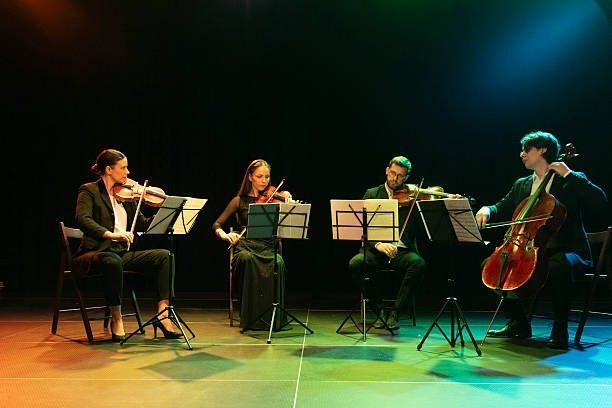
- Use the breath to communicate the beginning and emotional weight of a phrase.
- Use the eyes and head direction to identify the player or section carrying the next event.
- Keep gestures proportionate to the musical need, since excessive motion can obscure rather than clarify.
- Observe whether the ensemble responds to the intended cue, then adjust the timing or size of the movement.
Practical Rehearsal Protocols for Physical Cueing
The first practical step is to remove the audible count-off from selected passages. A spoken “one, two, three, four” is useful when learning material, but it can become a substitute for internal preparation. Instead, ask the ensemble to establish silence, settle into a shared posture, inhale together, and begin on the release of the breath. The cue does not need to be dramatic. It needs a clear preparation, a recognizable point of commitment, and an agreed character.
Physical anchoring makes that cue dependable. Instrument angle, shoulder release, torso direction, and posture shifts all affect how a player experiences time. A drummer may prepare a backbeat through a controlled lift rather than an audible count. A bassist can make the first note feel grounded by releasing unnecessary tension in the shoulders. A horn player can align the instrument and embouchure before the ensemble begins. These details are not decorative. They reduce random motion and give the group a common physical frame.
Training in stage presence can support this kind of work because dramatic arts programs combine voice, movement, rehearsal practice, critique, and production experience. The dramatic arts curriculum at MiraCosta College illustrates how intentional physical communication is developed through practical, embodied training. Musicians do not need to become actors, but they can borrow the discipline of making every visible action purposeful and readable across a performance space.
- Choose a short passage with a clear entrance, such as a chorus or an instrumental hit.
- Stand or sit in a configuration that allows every player to see at least one primary cue source.
- Establish the tempo internally, then take one shared preparatory breath without counting aloud.
- Begin the passage using only the physical cue, and record the result if possible.
- Repeat while changing one variable at a time, such as breath size, head movement, or instrument preparation.
- Discuss what the group actually perceived, then select the smallest cue that produces a reliable response.
Once the silent downbeat is stable, extend the exercise to cutoffs, tempo changes, and sectional handoffs. Practice these events slowly and at reduced dynamics, where the ensemble can hear whether the gesture arrives before the sound. Players should alternate between leading and following so that cueing becomes a shared responsibility rather than a burden placed entirely on the bandleader. Counting and metronome work remain valuable for developing an internal beat, but they should support communication rather than replace it.
Carving Dynamic Room Around the Lead Vocal
A static soundboard setting cannot anticipate every musical event. A vocal may sit comfortably above a sparse verse and disappear when guitars, keyboards, cymbals, and backing voices enter the chorus. Raising the vocal fader after the fact can make the mix feel unstable, while leaving every instrument at a fixed level forces the singer to compete instead of communicate. Dynamic balance must begin in the arrangement and continue through active acoustic monitoring.
The central question is not simply whether each player is loud enough. It is whether the lead melodic voice has sufficient space around its important frequencies, especially in the midrange where intelligibility often lives. Guitarists may choose a thinner voicing during verses, keyboard players may move a dense chord upward or downward, and backing vocalists may reduce consonant emphasis when the lead is carrying a critical lyric. These choices allow the vocal to remain present without demanding excessive amplification.
A practical dynamic ladder gives every section a role and a ceiling. The ladder should be rehearsed as an interpretation, not treated as a permanent volume chart.
| Section | Primary focus | Useful ensemble behavior |
|---|---|---|
| Verse | Lyric clarity and intimacy | Reduce density, soften attack, and leave midrange space for the lead voice. |
| Pre-chorus | Forward motion | Increase rhythmic activity gradually while preserving vocal intelligibility. |
| Chorus | Expansion and impact | Open the arrangement, widen supporting parts, and keep the lead vocal centered. |
| Instrumental break | Temporary melodic handoff | Allow the featured instrument to lead while the vocal microphone and backing parts recede. |
| Final chorus | Peak energy with definition | Build intensity through articulation and arrangement, not uncontrolled loudness. |
Acoustic space also changes what the ensemble perceives. Room response, monitor bleed, stage volume, and reflective surfaces can make a player believe that a sound is present when the audience hears something very different. Systems such as Meyer Sound”s Constellation acoustic platform demonstrate how microphones, processing, and loudspeakers can alter reverberation and distribute a more consistent acoustic experience. Most ensembles will not use such a system, but the underlying lesson remains relevant: the room is part of the instrument, and balance must be judged within that room.
Developing Micro-Listening Habits Across Acoustic Space
Active listening is a collective performance reflex. Each player should hear not only personal tone and timing, but also the relationship between that sound and the lead voice, rhythm section, room reflections, and neighboring instruments. Chamber programs commonly develop blend, intonation, non-verbal communication, and self-guided rehearsal because these skills require musicians to monitor the entire sonic field rather than wait for a director to correct every detail.
Micro-listening means noticing small conflicts before they become obvious problems. A keyboard chord may mask the vocal”s consonants. A guitar octave may occupy the same register as a melody. A cymbal swell may create the impression that the whole band has accelerated. When these events occur, the first solution is often subtraction: reduce gain, change articulation, alter an octave, shorten a sustain, or move the instrument away from a reflective surface. The Ancia Saxophone Quartet”s ensemble guidance similarly places listening, cueing, and flexible leadership at the center of collective musicianship.
- During each run-through, assign one musician to monitor the lead voice and another to monitor low-frequency accumulation.
- Mark moments where a phrase disappears, then test a quieter accompaniment before increasing amplification.
- Change octave voicings when two instruments occupy the same melodic register.
- Use shorter releases when reverberation blurs the next entrance.
- Rehearse from different positions in the venue so players understand how stage sound differs from audience sound.
Transform Rehearsals into Living Musical Dialogue
Breath cues, somatic balance, and dynamic listening should become part of the ordinary rehearsal routine rather than special exercises reserved for difficult passages. Begin a session with a silent entrance, rehearse one transition without an audible count, and require every player to identify the current melodic leader. Then examine whether the accompaniment supports that leader through volume, register, articulation, and physical attention.
The larger shift is from transactional note-playing to musical conversation. A click can establish a reference point, a chart can clarify structure, and a fader can solve a technical problem, but none of them can replace responsive human attention. Strip back the tools in selected rehearsal rounds, trust the shared breath, and allow the ensemble to adjust through listening. With repetition, the group gains more than tighter entrances. It develops a living sense of time, balance, and intent that remains available when the stage becomes unpredictable.